Exploring the Parallels: Lessons from Earth's Deserts for Understanding Mars
- Apr 17, 2025
- 3 min read
Earth’s deserts offer a unique window into the processes shaping Mars. Both environments share extreme dryness, temperature swings, and barren landscapes. By studying Earth’s deserts, scientists gain valuable clues about Martian geology, climate history, and potential for past life. This post explores how comparative geology between these two worlds deepens our understanding of Mars and guides future exploration.

How Earth’s Deserts Mirror Martian Conditions
Mars is often called the Red Planet because of its iron-rich surface, but its harsh environment also resembles some of Earth’s driest deserts. For example, the Atacama Desert in Chile is one of the driest places on Earth, with some areas receiving less than 1 mm of rain per year. This extreme aridity makes it a natural laboratory for studying how life and geological processes survive with minimal water.
Key similarities include:
Low humidity and scarce rainfall
Wide temperature fluctuations between day and night
Wind-driven erosion shaping the landscape
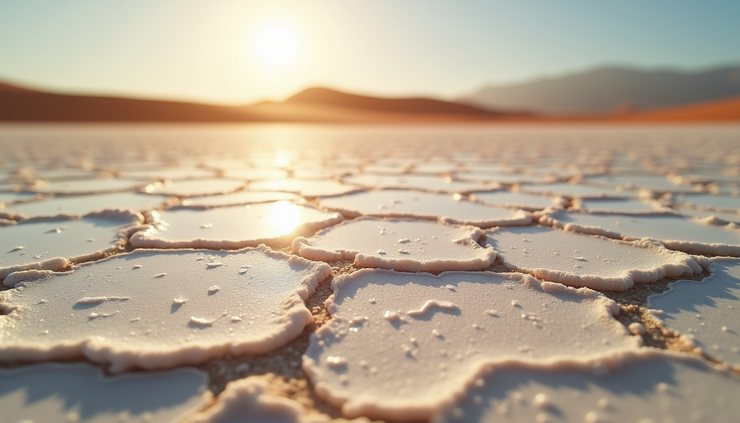
Salt deposits from evaporated water bodies
These conditions help scientists test instruments and hypotheses about Mars. For instance, the Atacama’s soil chemistry and microbial life provide analogs for what might exist beneath Mars’ surface.
Insights from Desert Landforms and Sediments
Desert landforms on Earth reveal how wind, water, and temperature shape landscapes over time. Martian rovers have discovered similar features, such as dunes, dry riverbeds, and layered rock formations. Understanding these features on Earth helps interpret Mars’ geological history.
Dunes and sand ripples: Both planets show wind-driven sand movement. Studying dune shapes and migration rates in deserts like the Sahara helps estimate wind patterns on Mars.
Ancient river channels: Dry channels in deserts like the Namib Desert resemble Martian valley networks. These suggest Mars once had flowing water, possibly supporting life.
Layered rocks: Sedimentary layers in desert canyons record past climates. Mars’ layered rocks, observed by orbiters and rovers, likely formed from ancient lakes or volcanic ash deposits.
By comparing these features, scientists reconstruct Mars’ environmental changes and identify locations where water once existed.
Microbial Life in Extreme Deserts as a Model for Mars
One of the biggest questions about Mars is whether it ever supported life. Earth’s deserts host extremophiles—microorganisms that survive in harsh conditions. Studying these microbes helps define the limits of life and guides the search for biosignatures on Mars.
For example:
Halophiles thrive in salty soils similar to Martian salt deposits.
Endoliths live inside rocks, protected from radiation and dryness, resembling potential Martian habitats.
Dormant microbes survive long dry spells, reactivating when moisture returns, a possible survival strategy on Mars.
Research in deserts like the McMurdo Dry Valleys in Antarctica, one of the closest Earth analogs to Mars, informs where and how to look for life signs on the Red Planet.
Using Desert Studies to Prepare Mars Missions
Earth deserts serve as testing grounds for Mars exploration technologies. Rovers, drills, and life-detection instruments undergo field trials in deserts to ensure they work under extreme conditions.
Examples include:
NASA’s Mars rover prototypes tested in the Mojave Desert to simulate Martian terrain.
Instruments designed to detect organic molecules trialed in the Atacama Desert’s soil.
Autonomous navigation systems refined in rocky desert landscapes.
These tests reduce risks and improve mission success. Desert research also helps select promising landing sites on Mars by identifying geological features linked to water and habitability.
What Earth’s Deserts Teach Us About Mars’ Past and Future
Studying deserts reveals that Mars was not always the frozen desert it is today. Evidence from layered rocks and ancient riverbeds suggests a wetter, warmer past. Understanding desert processes helps explain how Mars lost its atmosphere and water, transforming into its current state.
This knowledge shapes future exploration goals:
Searching for preserved biosignatures in sedimentary rocks.
Investigating underground ice and brines that might harbor life.
Planning human missions with insights into dust storms and resource availability.
Earth’s deserts act as natural classrooms, offering practical lessons for unraveling Mars’ mysteries.


Comments